
science-of-poecilia-reticulata-origin-of-guppies-2
February 22, 2025 Cichlids Fish Discus Fish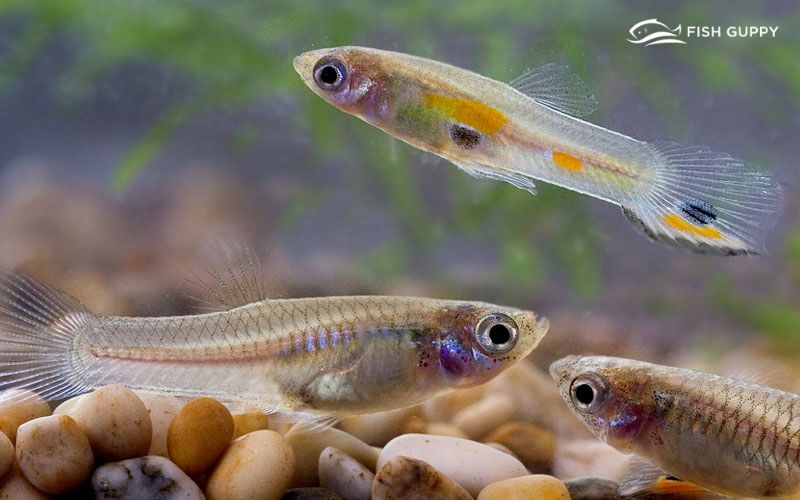
🧬 The Science of Poecilia reticulata: Where Do Guppies Come From?
Few aquarium fish have captured the imagination of hobbyists and scientists alike as much as the guppy, Poecilia reticulata. Known for its dazzling colors and playful behavior, the guppy is not just a pet-store favorite—it’s a scientific marvel studied in genetics, ecology, and evolutionary biology for more than a century.
In this article, we’ll explore the true origins of guppies, their natural range, and how nature’s little jewel evolved into the diverse aquarium strains we know today.

Alt Text: Wild Poecilia reticulata guppies swimming in clear freshwater stream in Trinidad.
(Example online image: Wild guppies)
🌎 1. Natural Habitat — Born in the Tropics
Poecilia reticulata originates from northern South America, primarily in countries like Venezuela, Guyana, Suriname, and Trinidad & Tobago. Wild guppies thrive in slow-moving freshwater streams, ponds, and even brackish coastal areas.
Their natural environment is typically warm (22–28°C) and filled with vegetation, providing perfect cover from predators such as cichlids and birds.
This tropical climate has shaped their adaptability and resilience, two traits that make guppies one of the easiest fish to keep in aquariums.

Alt Text: Map showing the native distribution of Poecilia reticulata across South America and Caribbean islands.
(Example online image: Guppy range map)
🧠 2. Evolutionary Story — Nature’s Experiment in Adaptation
Guppies are often called “the Darwin finches of the fish world” because they’re a model for studying evolution in real-time.
In the wild, guppy populations adapt rapidly to environmental pressures. For example:
-
In predator-rich streams, guppies evolve duller colors to blend in and survive.
-
In predator-free zones, males display vibrant patterns to attract females.
-
Females in different regions develop distinct preferences, shaping sexual selection and coloration diversity.
This dynamic interplay of natural selection and sexual selection has led to the incredible variety we see today in both wild and domestic guppies.
🔬 3. Scientific Classification
-
Kingdom: Animalia
-
Phylum: Chordata
-
Class: Actinopterygii
-
Order: Cyprinodontiformes
-
Family: Poeciliidae
-
Genus: Poecilia
-
Species: Poecilia reticulata
Originally described by Wilhelm Peters in 1859, guppies have since been classified into various subspecies and regional varieties.
Alt Text: Comparison of male and female Poecilia reticulata, showing color and size differences.
(Example online image: Male and female guppies)
🌍 4. Global Spread — From Rivers to Aquariums
In the early 20th century, guppies were introduced around the world for mosquito control. Their appetite for larvae made them natural allies in combating malaria.
Over time, these introductions led to feral populations in parts of Asia, Africa, and North America. Some adapted so well that they established self-sustaining wild colonies far from their native range.
Today, guppies are found in more than 60 countries, symbolizing their unmatched adaptability.
🎨 5. From Wild to Fancy — The Birth of Modern Strains
The guppies seen in aquariums today are the result of decades of selective breeding. Hobbyists and scientists have developed strains based on color, tail type, and pattern—such as:
-
Moscow Blue
-
Red Dragon
-
Albino Full Red
-
Dumbo Ear
-
Tuxedo and Snakeskin varieties
Despite these differences, every guppy you see in a pet store traces its ancestry back to the wild Poecilia reticulata of South America.
Alt Text: Colorful fancy guppy strains showcasing genetic diversity from selective breeding.
(Example online image: Fancy guppies)
🧩 6. Why Guppies Matter in Science
Guppies continue to play a key role in scientific research, helping scientists understand:
-
Genetic inheritance
-
Population dynamics
-
Evolutionary pressure and mate choice
-
Environmental adaptation
Their short lifespan and fast reproduction make them perfect for controlled experiments that reveal how species evolve over time.