
How to Setup a Brackish Water Guppy Tank for Optimal Health
June 1, 2024 Gold Fish Guppy Fish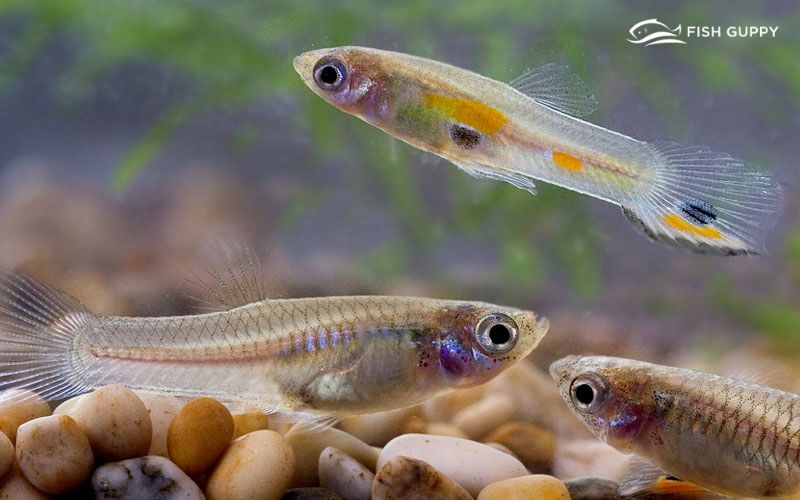
🌊 Introduction: Why Consider Brackish Water for Guppies?
While guppies are often kept in freshwater, they actually originate from regions with slightly brackish environments — areas where rivers meet the sea. In these natural habitats, guppies experience a mild salt concentration that helps boost their immune system, reduce disease risk, and enhance color vibrancy.
Creating a brackish setup can help mimic these conditions, resulting in hardier, healthier guppies that live longer and show improved reproduction rates. This guide explains how to establish and maintain a perfect brackish water guppy tank the professional way.

💧 Step 1: Understanding Brackish Water Basics
Brackish water is a mix of freshwater and saltwater, typically containing 1.003–1.010 specific gravity (SG) or 1–2 teaspoons of marine salt per gallon.
To maintain this salinity:
- Use marine aquarium salt (never table salt).
- Invest in a refractometer or hydrometer for precise salinity measurement.
- Always dissolve salt fully in dechlorinated water before adding it to the tank.
Pro Tip: Gradually introduce salt over several days to allow guppies to acclimate smoothly.

🐠 Step 2: Choosing the Right Tank and Equipment
For a stable brackish setup:
- Tank Size: Minimum 15–20 gallons for a guppy colony.
- Filtration: Use a sponge filter or hang-on-back filter rated for the tank volume.
- Heater: Maintain temperature between 25–28°C (77–82°F).
- Lighting: Moderate light supports live plants and highlights guppy colors.
Avoid overstocking. Brackish conditions already introduce osmotic stress, so keeping fewer fish ensures stability.
🌿 Step 3: Selecting Brackish-Compatible Plants
Not all aquarium plants tolerate salt. Choose salt-tolerant species such as:
- Anubias barteri
- Java fern (Microsorum pteropus)
- Vallisneria
- Mangrove propagules
Plants not only absorb nitrates but also create a natural environment that helps your guppies feel secure.
🧪 Step 4: Acclimating Your Guppies Safely
When transitioning guppies from freshwater to brackish:
- Reduce stress by turning off tank lights.
- Add small amounts of salted water every 2–3 hours over 24–48 hours.
- Use an airline drip method for precise acclimation.
- Monitor closely for signs of stress (clamped fins, lethargy, or erratic swimming).
Once guppies adjust, you’ll notice brighter colors and increased activity within days.
⚖️ Step 5: Maintenance & Monitoring
Maintaining a brackish system requires regular checks:
- Weekly 20–25% water change using pre-mixed brackish water.
- Keep specific gravity consistent (evaporation raises salt concentration).
- Test ammonia, nitrite, and nitrate levels weekly.
- Avoid sudden top-offs with pure freshwater; always balance salinity.
Healthy guppies in brackish tanks show stronger immunity and resistance to fin rot, ich, and fungal infections.
🧘 Step 6: Tank Mates for Brackish Guppies
Suitable brackish companions include:
- Mollies (Poecilia sphenops)
- Bumblebee gobies
- Knight gobies
- Nerite snails
Avoid strictly freshwater species that can’t tolerate even low salinity levels.