
Top 10 Essential Water Parameters for Breeding Show-Quality Guppies
October 25, 2024 Betta Fish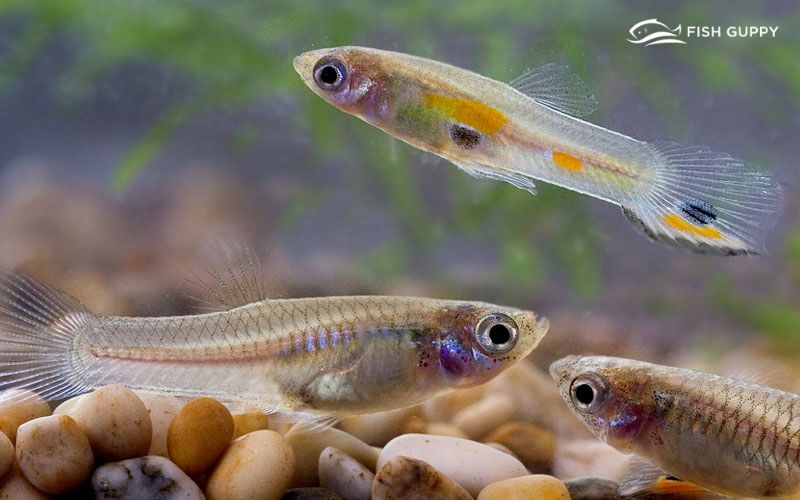
👑 Top 10 Essential Water Parameters for Breeding Show-Quality Guppies: The Complete Guide
The Pursuit of Perfection: Beyond the Basics of Guppy Care
The humble guppy, Poecilia reticulata, is often the first fish kept by any aspiring aquarist. Yet, to progress from simply keeping guppies alive to breeding magnificent, show-quality specimens is a commitment that separates the casual hobbyist from the serious breeder. The difference between a common pet store guppy and a prize-winning strain lies almost entirely in genetics, nutrition, and, most critically, water quality management.
Show-quality guppies are judged on specific standards: finnage size and shape, color intensity, pattern definition, and overall body conformation. None of these traits can be maximized without precise and highly stable water parameters. Water is not just a habitat; it is an active medium that influences every biological process, from scale development to immune response. If you are serious about producing vibrant, robust, and competition-ready fish, mastering the ten parameters below is your non-negotiable mission.
Part I: The Foundation – Temperature, $\text{pH}$, and Hardness
1. Temperature: The Engine of Growth and Metabolism
The temperature of your breeding tank is arguably the most fundamental parameter. It acts as the metabolic engine, regulating how fast your guppies grow, breed, and digest food.
- Recommended Range: $76^{\circ}\text{F}$ to $80^{\circ}\text{F}$ ($\approx 24^{\circ}\text{C}$ to $27^{\circ}\text{C}$).
- Detailed Impact: Running the temperature slightly higher (closer to $80^{\circ}\text{F}$) is often done in dedicated grow-out tanks to accelerate the growth of fry and encourage faster maturity. However, higher temperatures also mean higher oxygen consumption and a faster progression of the nitrogen cycle, requiring more diligent maintenance.
- The Stability Mandate: Temperature fluctuation is far more dangerous than a stable temperature that is slightly off the ideal. A swing of just $3$ to $5$ degrees within a short period can severely stress the fish, suppressing their immune system and opening the door to common diseases like Ich (white spot disease).
- Maintenance Tip: Invest in a reliable, oversized, and regulated heater. Consider using two smaller heaters in large tanks for redundancy and more even heat distribution. Always use an external thermometer to verify the heater’s reading.
2. $\text{pH}$ (Potential of Hydrogen): Striking the Alkaline Balance
$\text{pH}$ is a measure of the water’s acidity or alkalinity on a logarithmic scale. Guppies are Central American natives and prefer water that is neutral to slightly alkaline.
- Recommended Range: $7.0$ to $7.8$.
- The Biological Impact: A stable, slightly alkaline $\text{pH}$ is crucial for the optimal function of the guppy’s gills and digestive system. In highly acidic water ($\text{pH} < 6.5$), the fish may struggle to properly osmoregulate (balance salts and water), leading to internal stress. Furthermore, the beneficial bacteria in your filter perform best in this range.
- Troubleshooting $\text{pH}$ Swings: The biggest mistake is trying to adjust $\text{pH}$ quickly. If your $\text{pH}$ drops suddenly (a “$\text{pH}$ crash”), it is almost always due to critically low $\text{KH}$ (buffer). Never use chemical $\text{pH}$ regulators without first understanding your $\text{KH}$.
- Maintenance Tip: Use aged water for changes and test your tap water regularly. If your tap water is soft, you may need to add $\text{KH}$-boosting compounds, such as baking soda (sodium bicarbonate), very slowly during water changes.
3. $\text{GH}$ (General Hardness): The Calcium and Magnesium Reservoir
General Hardness ($\text{GH}$) measures the concentration of dissolved divalent metal ions, primarily Calcium ($\text{Ca}^{2+}$) and Magnesium ($\text{Mg}^{2+}$).
- Recommended Range: $8$ to $12$ $\text{dGH}$ (degrees of General Hardness) or $140$ to $210$ $\text{ppm}$.
- Why Minerals are Essential: Calcium is vital for skeletal and fin development, especially in rapidly growing fry. Magnesium aids in numerous metabolic processes and is crucial for heart and muscle function. Low $\text{GH}$ can lead to stunted growth, curved spines, and poor finnage—all major disqualifiers for show-quality fish.
- Adjustment Techniques: If your $\text{GH}$ is too low, you can increase it using commercial products that contain calcium and magnesium salts, or by adding mineral-rich substrates like crushed coral to your filter or tank.
4. $\text{KH}$ (Carbonate Hardness/Alkalinity): The $\text{pH}$ Buffer
Carbonate Hardness ($\text{KH}$) measures the concentration of carbonates and bicarbonates, the substances that absorb acid and prevent $\text{pH}$ from crashing. It is the backbone of water stability.
- Recommended Range: $4$ to $8$ $\text{dKH}$ ($70$ to $140$ $\text{ppm}$).
- The Buffer Function: The biological processes in an aquarium (decomposition of waste, nitrification) constantly produce acid. If there isn’t enough $\text{KH}$ to neutralize this acid, the $\text{pH}$ will suddenly drop to dangerously low levels, often overnight. This is called “old tank syndrome” and is lethal.
- Breeder Protocol: Never let your $\text{KH}$ fall below $4$ $\text{dKH}$. If it is too low, the $\text{pH}$ reading will be unreliable. Use baking soda or a commercial buffer mix to raise $\text{KH}$.
Part II: The Nitrogen Cycle – Zero Tolerance for Toxins
The nitrogen cycle is the core life-support system of a filtered aquarium. For show guppies, the goal is not merely “functional” but “perfect.“
5. Ammonia ($\text{NH}_3$): The Ultimate Stressor
Ammonia is a highly toxic compound excreted by fish and produced by decaying organic matter.
- Maximum Level: $0$ $\text{ppm}$ (parts per million). Anything above this is unacceptable for any fish, let alone show-quality specimens.
- The $\text{pH}$ Factor: Ammonia toxicity is significantly higher at warmer temperatures and higher $\text{pH}$ levels (which is exactly where guppies thrive!). An ammonia reading of $0.25$ $\text{ppm}$ at $\text{pH} 7.5$ is more dangerous than the same reading at $\text{pH} 6.5$.
- Action Plan: If detected, perform an immediate $50\%$ water change, and re-test the water. Deep clean your gravel or substrate, and check your filter flow rate. Never overfeed!
6. Nitrite ($\text{NO}_2^-$): Blocking Oxygen Uptake
Nitrite is the compound produced when nitrifying bacteria convert ammonia. It is less toxic than ammonia but still very dangerous as it prevents blood cells from carrying oxygen.
- Maximum Level: $0$ $\text{ppm}$.
- Significance: The presence of nitrite almost always indicates a recently cycled tank, a dying off of beneficial bacteria, or an overstocked/overfed tank. For a stable breeding operation, nitrite should never be detectable.
- Remedial Step: Similar to ammonia, water changes are crucial. Adding aquarium salt (non-iodized) can also temporarily help reduce nitrite toxicity by aiding the guppy’s gill function.
7. Nitrate ($\text{NO}_3^-$): The Slow, Cumulative Poison
Nitrate is the final, least toxic product of the nitrogen cycle, produced when the second group of bacteria converts nitrite.
- Maximum Level: Below $20$ $\text{ppm}$. Experienced breeders aim for $5$ to $10$ $\text{ppm}$.
- Impact on Show Fish: While not immediately fatal, chronic exposure to high nitrates leads to:
- Stunted growth (especially in fry).
- Reduced color vibrancy and sheen.
- Weakened immune systems, leading to fin rot and stress.
- Control Method: Nitrates are primarily removed through large, frequent water changes. Live plants (especially fast-growing floating plants like Frogbit or Hornwort) are excellent, natural nitrate filters.
Part III: Clarity, Purity, and Oxygenation
8. Dissolved Oxygen ($\text{DO}$): Maximizing Respiratory Health
Guppies need high levels of Dissolved Oxygen ($\text{DO}$) for optimal health and growth.
- Requirement: Near-saturation levels are desired. This is crucial for high-density breeding tanks.
- The Paradox: Warmer water (needed for fast fry growth) holds less dissolved oxygen. Therefore, an $80^{\circ}\text{F}$ breeding tank requires significantly more surface agitation than a $72^{\circ}\text{F}$ community tank.
- Enhancement: Use air stones, sponge filters (which act as both bio-filter and air disperser), and ensure the output of your hang-on-back filters breaks the water surface. Never skimp on aeration in a breeding setup.
9. Total Dissolved Solids ($\text{TDS}$): The Overall Mineral Load
$\text{TDS}$ is a measure of everything dissolved in the water—salts, minerals, and organic compounds.
- Recommended Range: $150$ to $250$ $\text{ppm}$.
- The $\text{TDS}$ Trap: While not a measure of toxins, a rapidly rising $\text{TDS}$ reading between water changes indicates a massive buildup of organic waste and unwanted minerals. For example, if you add too much food or skip water changes, the $\text{TDS}$ will rise quickly, leading to increased osmotic stress on the fish.
- Monitoring: Use a handheld $\text{TDS}$ meter to track the purity of your source water and monitor the rise in your tank. A stable $\text{TDS}$ is a sign of good maintenance.
10. Chlorine/Chloramine: Zero Tolerance for Tap Water Toxins
Chlorine ($\text{Cl}_2$) and Chloramine ($\text{NH}_2\text{Cl}$) are disinfectants added to tap water. They are fatal to fish and destroy your beneficial bacteria.
- Maximum Level: $0$ $\text{ppm}$.
- The Crucial Distinction: Standard dechlorinators remove Chlorine, but you must use a water conditioner that specifically treats Chloramine. Chloramine releases ammonia and chlorine when broken down, and a simple dechlorinator will leave the toxic ammonia behind.
- Breeder Protocol: Always treat new water before it enters the tank.
Part IV: Advanced Techniques and Protocols
The Importance of Testing Accuracy
To maintain show-quality water, a master liquid test kit is mandatory. Test strips are not precise enough for the narrow tolerances required for high-end breeding.
- Daily Check: Temperature, Visual inspection (color, behavior).
- Weekly Check: Ammonia, Nitrite, Nitrate (before water change), $\text{pH}$, $\text{TDS}$.
- Monthly Check: $\text{GH}$ and $\text{KH}$.
Equipment for Ultimate Stability
- $\text{RO/DI}$ Unit: Many top breeders use Reverse Osmosis/De-ionized ($\text{RO/DI}$) water and remineralize it with specific salts (like Seachem Equilibrium or custom mixes) to hit the exact $\text{GH}$ and $\text{KH}$ targets, offering ultimate control over water chemistry.
- Sponge Filters: These are the preferred filtration method for guppy fry and breeding tanks because they provide excellent biological filtration, high $\text{DO}$ via aeration, and pose no risk of sucking up tiny fry.
🏆 Your Guppy Breeding Action Plan
Mastering these ten parameters is the secret to producing magnificent, show-quality specimens. It requires dedication, precision, and consistency.
- Invest in Precision: Acquire a reliable liquid test kit and a digital $\text{TDS}$ meter.
- Establish Stability: Consistency is paramount. Find the ideal, comfortable range for your strain and never let parameters fluctuate wildly.
- Perform Massive, Consistent Water Changes: $50\%$ weekly water changes is a typical schedule for serious breeders to manage nitrates and replenish essential buffers/minerals.